HICLOVER Automatic Roll Air Filter for Australia’s Heavy Industry: Iron Ore, Cement Kilns, and Nickel Refining Workshops

HICLOVER Automatic Roll Air Filter for Australia’s Heavy Industry: Iron Ore, Cement Kilns, and Nickel Refining Workshops

Australia’s industrial competitiveness is built on continuous operations. In iron ore processing hubs, cement and lime kiln facilities, and nickel refining workshops, airborne dust is not only a housekeeping problem―it is a system-wide reliability risk.

In these environments, intake air filtration affects HVAC stability, electrical room protection, worker comfort, and the long-term performance of fans, coils, and ductwork. Traditional fixed filters often fail in Australian conditions because they load too quickly, creating high pressure drop and frequent manual replacement cycles.

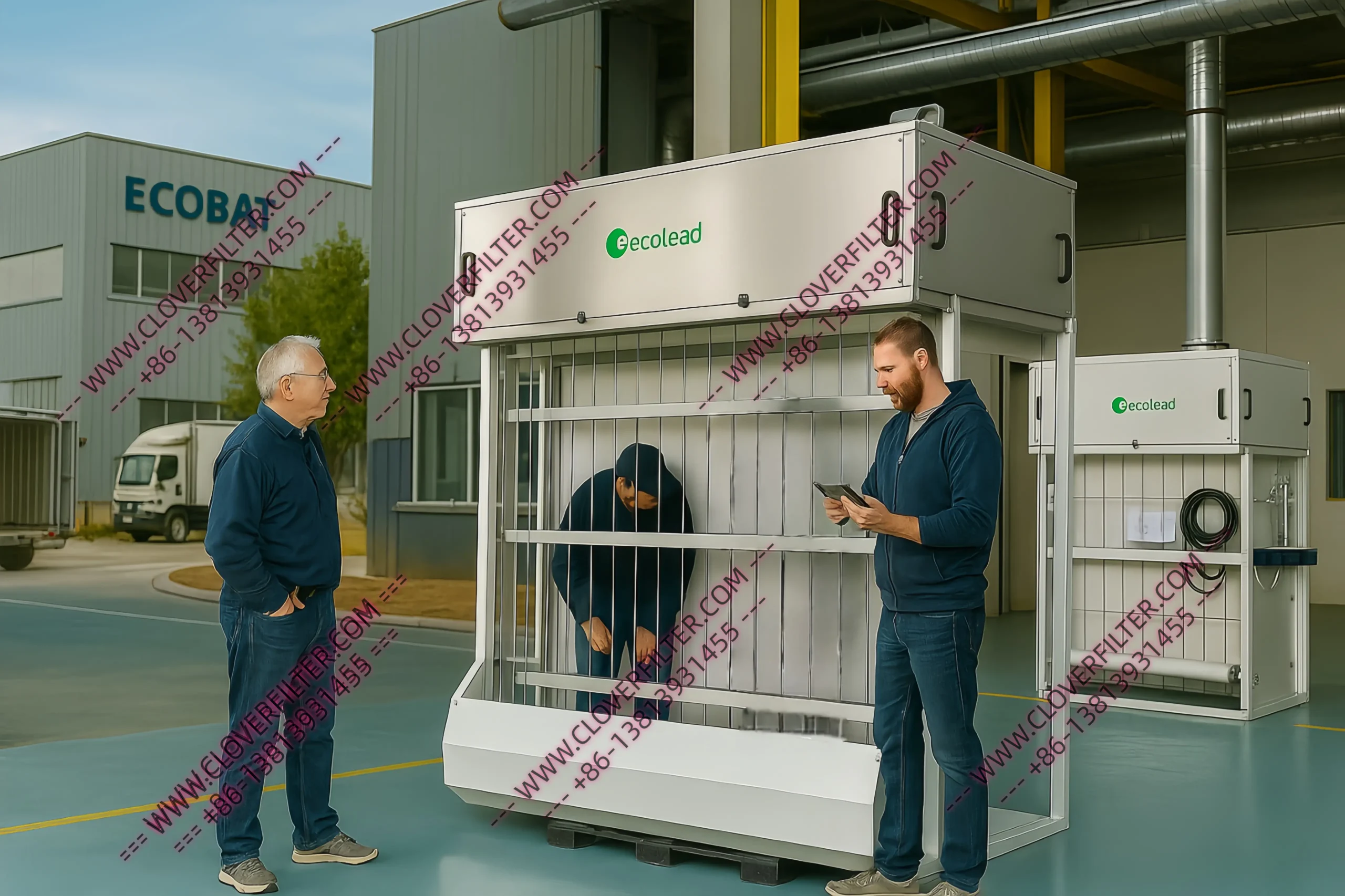
The HICLOVER automatic roll air filter is designed for exactly these situations: high dust loading, long runtime requirements, and limited maintenance windows.


Australian Site Conditions That Stress Conventional Filters

Across Western Australia and other industrial regions, plants often experience:

  • persistent fine red dust intrusion from open-yard operations

  • abrasive particulate from crushing, screening, and conveying

  • kiln-related powder drift and alkaline dust in cement zones

  • workshop airborne debris caused by grinding, welding, and vehicle movement

  • seasonal wind events that cause sudden dust spikes

These patterns generate what engineers often describe as “high-load intake corridors,” where filters can clog rapidly and airflow becomes unstable. When airflow drops, energy use rises, equipment temperatures increase, and workshops become harder to control.


Why Automatic Roll Filtration Fits Australia’s Continuous Production Culture

The key difference between roll filtration and panel filtration is operational logic.

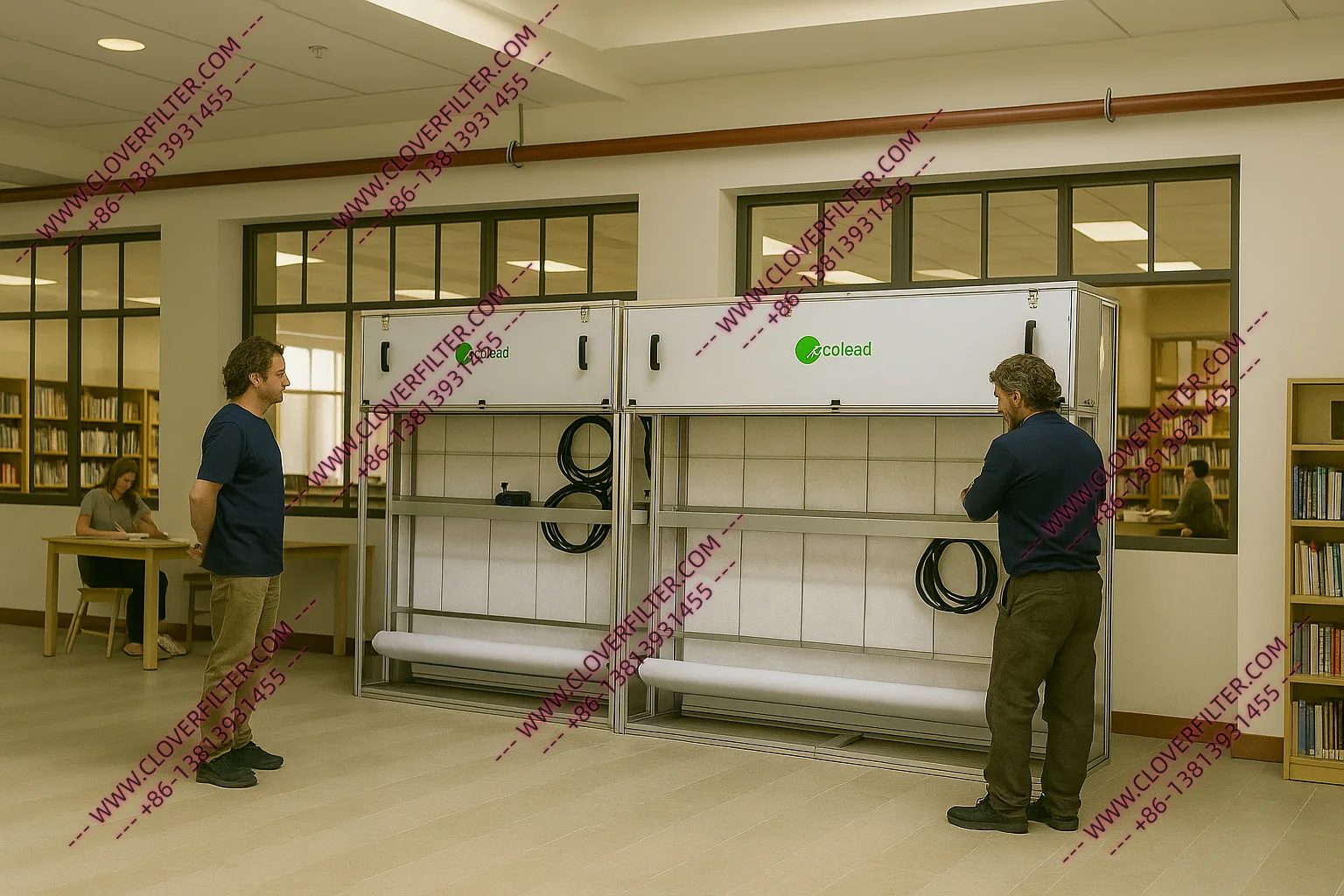
A fixed filter collects dust until it blocks, then maintenance must intervene. An automatic roll system maintains filtration performance by advancing fresh media automatically, keeping resistance within a controlled range. For Australian plants focusing on uptime and lean teams, this becomes a practical upgrade.

The HICLOVER automatic roll air filter is typically selected because it supports:

  • stable airflow under variable dust loading

  • reduced filter change frequency

  • lower manual maintenance hours

  • cleaner internal duct and coil conditions

  • improved HVAC energy efficiency in dusty corridors

Learn more about automation-ready roll filtration: www.cloverfilter.com


Keyword Application 1: Automatic Roll Air Filter for Australian Iron Ore Processing Plants

Iron ore processing plants operate some of the most abrasive air environments in Australia. Dust is generated through multiple stages: unloading, crushing, screening, transfer points, and stockpile handling. Even with dust suppression, intake systems still face continuous particulate exposure.

An automatic roll air filter for Australian iron ore processing plants can be applied to:

  • processing building HVAC intake corridors

  • electrical rooms and MCC container shelters

  • control room fresh air intake modules

  • workshop ventilation systems near ore handling zones

By maintaining a cleaner intake stream, roll filtration reduces the risk of coil fouling, duct contamination, and unstable pressure drop caused by rapid dust loading.

Reference link: www.cloverfilter.com


Keyword Application 2: Automatic Roll Air Filter for Australian Cement and Lime Kilns

Cement and lime kiln environments are unique because dust is not only heavy―it can also be chemically aggressive. Alkaline particulate, fine powder drift, and continuous material movement often overload standard filters quickly.

An automatic roll air filter for Australian cement and lime kilns helps protect intake air corridors feeding:

  • kiln building HVAC systems

  • operator cabins and control rooms

  • electrical and instrumentation rooms

  • plant workshop ventilation corridors

For kiln sites, maintaining stable airflow matters because pressure fluctuations can cause temperature instability, reduced ventilation effectiveness, and higher fan power draw.

To directly check the keyword search results anytime, here is a usable search link:
https://www.bing.com/search?q=automatic+roll+air+filter+for+australian+cement+and+lime+kilns


Keyword Application 3: G3 Grade Synthetic Fiber Filter for Australian Nickel Refining Workshops

Nickel refining workshops require stable ventilation―not only for comfort, but to support maintenance quality, equipment protection, and dust control. One frequently used niche term is the G3 grade synthetic fiber filter, a coarse filtration layer commonly applied as a prefilter stage in industrial HVAC.

A G3 grade synthetic fiber filter for Australian nickel refining workshops is typically used to capture:

  • coarse dust and fibers before fine filtration

  • workshop airborne debris from grinding and handling

  • mixed particles from vehicle traffic and open-door airflow

In practice, many sites combine a G3 prefilter layer with an automatic roll system upstream, especially where dust loading is unpredictable and the cost of manual replacement is high.

Product reference: www.cloverfilter.com


PLC Automation: Less Manual Work, More Predictable Maintenance

Australia’s remote and high-output industrial operations often have limited maintenance access. PLC automation is therefore not an optional feature―it is the core advantage.

The HICLOVER automatic roll air filter supports PLC-based control such as:

  • differential pressure (ΔP) monitoring and auto-feed trigger

  • adjustable feeding cycles to match dust seasons

  • overload protection to avoid unnecessary media movement

  • alarm signals for roll replacement planning

  • manual override for shutdown periods or special maintenance

This reduces routine inspection frequency and helps prevent sudden airflow collapse caused by overloaded panel filters.


Where HICLOVER Roll Filters Are Commonly Used

HVAC Systems
For industrial buildings, workshops, and control rooms to filter dust, pollen, and debris from intake air.

Industrial Applications
Factories and heavy processing sites where air cleanliness supports stable production conditions.

Power Plants and Utility Corridors
To protect turbines, cooling equipment, and ventilation systems from contaminant buildup.

Paint Booths and Surface Treatment Areas
Helps reduce dust contamination that can affect finishing quality.

Airports or Large Venues
Useful where high-traffic dust load impacts consistent airflow performance.


Key Benefits for Australian Heavy Industry

Consistent Air Quality
Automatic media advancement maintains filtration efficiency and reduces airflow instability.

Low Maintenance
Minimizes manual labor by reducing frequent filter replacement cycles.

Extended Equipment Life
Protects HVAC coils, fans, ductwork, and intake systems from abrasive dust buildup.

Energy Efficiency
Prevents clogged filters from forcing fans and ventilation systems into higher energy consumption.


A Practical Filtration Strategy for Harsh Dust Corridors

Whether the site is an iron ore processing plant in Western Australia, a cement and lime kiln facility, or a nickel refining workshop, filtration must match Australia’s operational reality: heavy dust, long runtime, and limited downtime for maintenance.

The HICLOVER automatic roll air filter delivers controlled airflow, PLC automation, and reduced manual workload―supporting stable ventilation and reliable plant operation in mining-driven industrial zones.


Contact

Mobile (WhatsApp): +86-13813931455
Website: www.cloverfilter.com
Email: [email protected]

Mobile: +86-13813931455(WhatsApp)

Website: www.cloverfilter.com

Email:     [email protected] 


2026-01-13/18:01:42
HICLOVER Automatic Roll Air Filter for Australia’s Mining & Coal Processing Dust Corridors

HICLOVER Automatic Roll Air Filter for Australia’s Mining & Coal Processing Dust Corridors

Australia’s mining sector is built on scale, continuity, and harsh operating conditions. From coal handling and preparation plants (CHPP) in Queensland and NSW, to gold mines in Western Australia, airborne dust is not an occasional issue―it is a constant load on ventilation systems, workshops, and dust collection corridors.

In these environments, filtration is not only about air cleanliness. It directly affects equipment reliability, fan energy consumption, workshop safety, and the service life of HVAC and dust extraction systems.

This is why more Australian sites are shifting from traditional fixed-panel filters to automated systems like the HICLOVER automatic roll air filter, designed to reduce manual maintenance and keep airflow stable under high dust loading.


Australia’s High-Dust Reality: A Filtration Problem That Never Pauses

Mining and mineral processing facilities often face airborne contaminants from:

  • coal crushing, screening, and conveyor transfer points

  • haul roads and vehicle movement near workshops

  • blasting and drilling fine dust dispersion

  • bulk material stockpiles and wind-driven particulate

  • seasonal dry cycles that increase PM10 accumulation

These conditions create what many engineers call “dust corridors”―zones where intake air repeatedly carries abrasive particles into ventilation systems, control rooms, and maintenance areas. Standard filters clog quickly, forcing frequent shutdowns or filter changes that consume labor and disrupt operations.


Automatic Roll Filtration: Built for Continuous Operation

The HICLOVER automatic roll air filter is designed for places where dust loading can fluctuate sharply and airflow must remain stable. Instead of relying on a fixed filter panel until it blocks, the roll filter advances clean media automatically, maintaining filtration efficiency with minimal intervention.

It supports the search intent behind industrial keywords such as:

  • self-advancing filter media system

  • high dust load intake prefilter

  • differential pressure controlled filter feeding

  • workshop HVAC coarse filtration upgrade

  • dust extraction prefiltration module

These terms are not mainstream consumer searches, but they are frequently used by mining maintenance teams, EPC contractors, and site engineers.

More product details: www.cloverfilter.com


Keyword Application 1: Automatic Roll Air Filter for Coal Handling and Preparation Plants

Coal handling and preparation plants operate some of the most dust-intensive corridors in Australia. Fine coal dust, fibrous debris, and dry abrasive particles can quickly overload typical prefilters.

An automatic roll air filter for coal handling and preparation plants works as a first-line defense for:

  • CHPP building HVAC intake systems

  • conveyor transfer tunnel ventilation

  • MCC rooms and electrical shelters

  • workshop and control-room fresh air systems

As media loads up, the roll advances automatically, reducing the risk of airflow collapse that can trigger temperature rise, discomfort, or increased fan power draw.

To explore the keyword directly, here is a search link you can open anytime:
https://www.google.com/search?q=automatic+roll+air+filter+for+coal+handling+and+preparation+plants


Keyword Application 2: G3 Synthetic Fiber Filter for Australian Mining Workshops

Mining workshops in Australia require practical filtration that can handle coarse particulate without causing excessive pressure drop. One commonly searched term is G3 synthetic fiber filter, typically used as a prefilter layer in industrial HVAC and air intake setups.

A G3 synthetic fiber filter for Australian mining workshops can be used to trap:

  • large dust particles from equipment movement

  • fibrous debris and lint from maintenance environments

  • mixed coarse particles before they reach fine filters

In real sites, many workshop systems benefit from combining a coarse prefilter stage with automated roll filtration, especially where dust loads are unpredictable during peak maintenance activity.

HICLOVER filtration options for harsh workshops: www.cloverfilter.com


Keyword Application 3: Heavy Duty Coarse Filter for Australian Gold Mine Dust Collection

Gold mining environments in Australia―especially arid regions―often produce heavy airborne dust that migrates into dust extraction systems and intake corridors. For these sites, a heavy duty coarse filter is not just about filtration efficiency, but about durability and consistent airflow.

A heavy duty coarse filter for Australian gold mine dust collection is typically needed in front-end applications such as:

  • dust collector intake protection

  • workshop ventilation corridors

  • containerized shelters and skid-mounted HVAC units

  • turbine or generator cooling intake systems (site-dependent)

The goal is to prevent bulk contamination, reduce clogging events, and keep downstream equipment stable.

For automation-ready coarse filtration systems: www.cloverfilter.com


PLC Automation: Reducing Manual Work and Unplanned Shutdowns

Many Australian mines and remote projects run with lean teams. That makes routine filter checks expensive and sometimes unsafe due to access requirements.

The PLC-controlled automatic roll air filter design reduces manual work by enabling:

  • differential pressure (ΔP) monitoring and trigger logic

  • automatic media feeding in small increments

  • adjustable feeding frequency to match dust seasons

  • alarm signals for roll replacement planning

  • stable airflow without daily operator intervention

This approach supports a maintenance strategy that is predictable rather than reactive―one of the main reasons automated filtration is increasingly requested in mining tenders and workshop retrofits.


Common Uses Across Australian Industrial Sites

The HICLOVER automatic roll air filter is widely applicable for:

HVAC Systems
Used in industrial buildings and workshops to capture dust and debris before it loads coils and ducts.

Industrial Applications
Common in factories, processing facilities, and mining-related manufacturing environments where air cleanliness affects reliability.

Power Plants and Energy Systems
Helps prevent contaminant buildup on cooling systems, turbines, or auxiliary intake corridors.

Paint Booths and Surface Preparation Zones
Reduces airborne particles that can cause surface defects or overspray contamination.

Airports or Large Venues
Supports stable airflow under high-traffic dust loads, depending on site design.


Key Benefits Under Harsh Dust Load Conditions

Consistent Air Quality
Roll media advances automatically to maintain stable filtration performance and reduce sudden airflow restrictions.

Low Maintenance
Less manual filter replacement and fewer emergency stoppages, especially valuable for remote Australian sites.

Extended Equipment Life
Protects HVAC coils, workshop ventilation ducts, and intake fans from dust accumulation and abrasive damage.

Energy Efficiency
Prevents clogged filters from forcing fans to operate at higher power levels, reducing wasted energy.


A Practical Fit for Australia’s Mining Operations

For Australian coal plants, mining workshops, and gold mine dust collection systems, filtration must do more than “filter.” It must function under constant dust attack, while keeping maintenance simple.

The HICLOVER automatic roll air filter provides a stable intake solution with PLC automation, making it suitable for mining-scale airflow corridors where downtime and labor costs are critical concerns.


Contact

Mobile (WhatsApp): +86-13813931455
Website: www.cloverfilter.com
Email: [email protected]

Mobile: +86-13813931455(WhatsApp)

Website: www.cloverfilter.com

Email:     [email protected] 


2026-01-13/17:58:11

HICLOVER Automatic Roll Air Filter Solutions for Australia’s Harsh Air Corridors

HICLOVER Automatic Roll Air Filter Solutions for Australia’s Harsh Air Corridors

Australia’s industrial landscape is defined by long-distance logistics, extreme dust loads, coastal salt mist, and large-scale infrastructure that must run reliably with minimal downtime. From Australian desalination plant air corridors exposed to moisture and airborne salt, to oil & gas intake systems facing fine particulate intrusion, and lithium battery factories demanding stable process air quality, filtration is not a “consumable accessory”―it is a continuous protection system.

For operations seeking reduced maintenance and higher uptime, the HICLOVER automatic roll air filter has become a practical approach: it maintains consistent intake air quality by advancing clean media automatically when resistance rises, keeping equipment protected without frequent manual intervention.


Why “Air Corridors” Matter in Australia

In many Australian sites, intake air does not come from a clean indoor environment. It travels through practical, site-built intake corridors, louvers, pre-filter chambers, containerized intake skids, or long HVAC supply paths―often near:

  • Coastal desalination zones with salt-laden aerosols

  • Remote mining corridors with high PM loading

  • Industrial precincts with mixed dust, fibers, and dry debris

  • Port-side plants where humidity and contaminants coexist

These “air corridors” concentrate particles, and once conventional panel filters load up, pressure drop increases quickly. The result is higher energy consumption, reduced air volume, and accelerated wear in downstream equipment.


Automatic Roll Filtration: A Different Maintenance Logic

A standard fixed filter works until it blocks, then it must be manually replaced. In contrast, an automatic roll media prefilter uses a continuous filter belt (roll media) that advances incrementally.

The objective is simple: keep filtration performance stable without frequent shutdowns. This is especially valuable in Australian industrial environments where labor cost, remote-site access, and uptime targets are strict.

Key operational outcomes include:

  • Stable airflow and reduced fan overload

  • More predictable pressure drop profile

  • Less frequent operator intervention

  • Cleaner internal ducts, coils, and downstream fine filters


PLC Automation for Unmanned or Low-Staff Sites

Modern Australian processing plants often run with lean staffing models, especially in mining and remote resource corridors. That is why PLC-based automation is a core part of HICLOVER roll filter design.

Typical PLC automation features include:

  • Differential pressure (ΔP) monitoring logic

  • Interval-based or threshold-based media advancement

  • Alarm output for roll replacement planning

  • Auto-stop protection to prevent over-feeding

  • Manual override mode for maintenance teams

This supports what many facilities are searching for: reduced manual filter checks, less reactive maintenance, and better control of intake air stability.


Keyword Application 1: Automatic Roll Air Filter for Australian Desalination Plant Air Corridors

Desalination plants deal with unique airborne challenges. Even when the main process is water-focused, the air environment often includes:

  • Salt mist and coastal aerosol carryover

  • High humidity causing dust adhesion and filter “caking”

  • Seasonal wind-driven fine particles

An automatic roll air filter for Australian desalination plant air corridors helps keep intake passages cleaner by continuously refreshing media surface area. This reduces the risk of sudden airflow drop caused by rapid loading during windy coastal events.

Many operators also value the “predictable maintenance window” of roll filtration―media can be advanced gradually rather than waiting for a full blockage event.

Related product reference: HICLOVER automatic roll air filter
External link: www.cloverfilter.com


Keyword Application 2: Automatic Intake Air Filter for Australian Oil and Gas Plants

Oil and gas plants across Australia frequently operate near dusty infrastructure zones, construction activity, or semi-arid terrain. Intake systems may feed:

  • HVAC units for control rooms and shelters

  • Air supply for turbine auxiliaries and MCC rooms

  • Instrument air compressor rooms (site-specific)

With an automatic intake air filter for Australian oil and gas plants, the goal is not only dust reduction, but also the protection of sensitive cooling surfaces and stable airflow for high-reliability electrical and automation environments.

Searchers often look for technical terms such as:

  • intake prefilter module

  • self-advancing filter media

  • differential pressure controlled filter feeding

  • corrosion-resistant filter housing (for coastal LNG zones)

  • low service frequency filtration system

These terms may be niche, but they reflect real engineering queries from procurement teams and maintenance supervisors.

Learn more: www.cloverfilter.com


Keyword Application 3: Automatic Roll Media Prefilter for Australian Lithium Battery Factories

Australia’s lithium sector is expanding rapidly, and associated processing lines and battery-related facilities emphasize controlled environments and consistent ventilation. A major issue is managing the fine dust and mixed particulate load coming from:

  • raw material handling zones

  • industrial traffic and nearby earthworks

  • high-utilization HVAC corridors

An automatic roll media prefilter for Australian lithium battery factories functions as the first barrier, reducing bulk loading on secondary filters and helping stabilize airflow.

Common engineering motivations include:

  • extending the service life of downstream bag filters or fine filters

  • lowering HVAC energy consumption by reducing sudden clogging

  • reducing particulate intrusion into process-adjacent areas

For many facilities, the biggest operational advantage is reducing “maintenance spikes” and avoiding short-notice filter changes during busy production cycles.

Reference link: www.cloverfilter.com


Strong Fit for Mining and Quarry Operations in Australia

Mining is one of the most demanding air filtration environments in Australia. Dust conditions are not occasional―they are structural. Typical contaminant profiles include:

  • high PM10 / PM2.5 concentrations

  • abrasive mineral dust

  • fibrous debris and plant matter

  • cyclic dust storms and dry seasonal loads

A HICLOVER automatic roll filter supports mining operations by providing:

  • continuous intake protection for containerized power rooms

  • reduced coil fouling on packaged HVAC systems

  • more stable airflow in intake corridors near conveyors and haul roads

  • better uptime for ventilation systems supporting operator comfort and equipment cooling

In real mining practice, the value is not “perfect air.” The value is keeping airflow stable and keeping systems running with fewer service interruptions.


Energy Efficiency and Equipment Life: Practical Benefits

When filters clog, fans work harder and the whole system consumes more power. A self-advancing roll filter reduces this effect by preventing heavy blockage.

Key benefits remain consistent:

Consistent Air Quality
The filter automatically refreshes its surface, maintaining effective filtration without waiting for total blockage.

Low Maintenance
By reducing manual replacement frequency, labor requirements drop―particularly important in remote or high-safety-access areas.

Extended Equipment Life
Cleaner airflow protects HVAC coils, heat exchangers, and intake equipment from dust buildup.

Energy Efficiency
Stable pressure drop helps prevent overloading fans and reduces wasted energy caused by clogged panels.


Summary: A Practical Automation Upgrade for Australian Industry

If your site is dealing with dust-heavy corridors, long intake paths, or high-maintenance filter zones, a HICLOVER automatic roll air filter offers an upgrade path focused on reliability and reduced manual workload. It is well suited to:

  • mining and mineral processing

  • oil & gas facilities

  • desalination plants near coastal aerosol exposure

  • lithium and industrial manufacturing zones

For Australian conditions, automation is not a luxury feature―it is often the simplest way to keep filtration stable at scale.


Contact

Mobile (WhatsApp): +86-13813931455
Website: www.cloverfilter.com
Email: [email protected]

Mobile: +86-13813931455(WhatsApp)

Website: www.cloverfilter.com

Email:     [email protected] 


2026-01-13/17:56:31

what’s Incinerators

Incinerator, incineration equipment to burn material you want to burn. most of time, Incinerator for waste burning, including solid waste, liquid waste and gas waste. the Incinerator fuel including oil, gas, coal, wood, etc. the fuel function for start burn, keep waste burn or only keep burn itself to get high temperature. Incinerator request 1/2/3/more Incinerator chamber, the first chamber for waste and some time, there are 2 even if 3 first chamber(first chamber union) for waste. the senondary chamber for the gas/smoke from first chamber and the function for enviromental protection. the part is necessary because we not only burn the waste, but also for the result we burn the waste. for large capacity Incinerator, after the 1/2/3 combustion chambers, there are some part for emission treatment, this are not burning parts, they are only for smoke treatment. the function including Desulfurization, Deacidification, Ash remove, Defogging, Heat recovery, Production hot water, Hot gas for waste pre-dry, etc. at the end, the smoke will output in to environment.  

Biomedical Waste Incinerator, 10-15 KG 

The first is a small
20kg/per hr incinerator for a small-medium sized hospital, and the
second is a 500kg per/hr incinerator for a company planning to start a
incineration service in Lahore.Burn Rate : >200 kg per hour
Average fuel consumption : ~29 kg per hour ( Or lesser)
Gas Retention in Secondary Chamber : 2 secs
Temperature Monitoring : Yes
Average Ash Residue : 3%Medical waste management practises here are sub-standard. I have come across your small scale medical waste management units.Biomedical Waste Incinerator, 10-15 kg
Manufacturer:
Brand:
Type / Model:
Country of Origin:
Description of Function
The Biomedical Waste Incinerator is used for Incineration of each type of Biomedical Waste.
The Disposal of such Biomedical waste is a very important as it is a dangerous wastes for
human life, and It is only possible with a perfect incinerator.
Operational Requirements
It shall be operated by manual and automated mode.
The combustion efficiency (CE) shall be at least 99.00%.
The combustion efficiency is computed as follows:
C.E.= __%CO2______ x 100
%CO2 + %CO
Emission Standards: Lower emission rates are preferred.
Parameters                   Concentration in mg/Nm3 (12% CO2 correction
Max total dust              30mg/m3
Max Sulphur Dioxide      200mg/m3
Max Nitrogen dioxide    400mg/m3
Max Carbon                     100mg/m3
Monoxide
Minimum stack height shall be 30 metres above ground.
Volatile organic compounds in ash shall not be more than 0.01%.
System Configuration
Biomedical Waste Incinerator, complete unit.
Technical Specifications
Incinerator:
It shall be Electrical or Diesel Fired Incinerator or Controlled Air & pyrolytic.
Type of Waste: Biomedical Waste
It shall have burning capacity 10-15 kg/hr.
Fuel: Diesel
Burner: Monoblock fully automatic burners.
Temperature: Primary Chamber 800 ± 50 oC, Secondary Chamber 1050 ± 50 oC.
Type of Waste: Biomedical waste with moisture content up to 85%.
Destruction Efficiency: 99%.
It shall have separate digital display of temperature for both chambers.
It shall have provision for measuring primary & secondary chamber temperatures using external
thermo coupler.
Secondary chamber gas residence time shall be minimum 1 second at 1050 oC.
Primary Chamber:
Type: Static Solid Hearth
Material of Construction: Mild Steel, 5mm thick
Refractory thickness: approx.115mm thick
Material: Refractory bricks confirming to international standard.
Temperature resistance: 1400 oC
Insulation thickness: approx.115mm thick
Material: Insulation bricks confirming to international standard.
Waste Charging: Manual & Automatic waste charging.
Ash Removal: Manual/automatic
Secondary Chamber:
Type : Static Solid Hearth
Material of Construction: Mild Steel, 5mm thick
Refractory thickness: approx.115mm thick
Material: Refractory bricks confirming to international standard.
Temperature resistance: 1400 oC.
Insulation thickness: approx.115mm
Material: Insulation bricks confirming to international standard.
Waste Charging: Manual & Automatic waste charging.
Emergency Stack:
Type: cylindrical, top mounted on venturi ejector.
Material of Construction: Mild Steel, 3mm thick.
Refractory: 75mm thick castable.
Insulation: 25mm thick castable.
Quencher:
Material of construction of outer body: Mild Steel refractory lined from inside.
Shall have water circulation system with centrifugal pump.
It shall have to reduce flue gas temperature before venturi scrubber.
Shall provide pump motor of suitable capacity.
Air Pollution Control Device – Venturi Scrubber
Type: High pressure jet type.
MOC: Stainless steel – 316L.
Temperature at the outlet: 78-80 oC
Scrubbing Media: Water with 5% caustic
Re- Circulation Pump for Venturi Scrubber
Type: Centrifugal
Application: PP/SS
Piping : PPR
Droplet Separator & Re-Circulation Tank (Integral)
Type: Cyclonic
Application: To separate water droplets from flue gases
Material of Construction: Mild Steel Rubber lined 3mm thick
I.D. Fan:
Type: High pressure centrifugal
Material of Construction: Stainless steel 304, impeller and mild steel rubber lined casting
Drive: Bel
Combustion Fan:
Type: Centrifugal
Modulation: Manual damper control
Material of Construction: Mild Steel
Drive: Direct drive
Burners:
No. of burners: 2 Nos. (1 No. in Primary Chamber and 1No. in Secondary Chamber)
Type: Monoblock fully automatic
Fuel: Diesel
Fuel Oil Storage Tank:
Shall provide suitable capacity of oil storage tank.
Material of Construction: Mild steel.
Facility for visual checking of fuel shall be there.
It shall have diesel consumption monitoring system.
It shall come with diesel oil level indicator, piping with valves & N.R. valve.
Control Panel:
Type: Manual & Automated PLC based control panel with printer & recording device.
Material of Construction: CRCA sheet
It shall have digital temperature controller.
Epoxy powder coated washable paint finish.
It shall have audio-visual alarm system.
Chimney of 30 meters Height:
Material of Construction: Mild Steel
It shall be self-supporting type.
Height shall be 30 meters from ground level.
Paint The chimney is painted externally with two coats of heat resistant aluminum paint
Shall provide ladder till the top.
It shall have 3mm thick rubber lining from inside for protection.
It shall come with aviation lamp, lightening arrestor, stack, drain, inspection platform, sampling
port.
Consumption certificate:
The bidder must submit diesel consumption for a daily operation of 6 hours.
Turnkey:
Prices offered shall be inclusive of all civil works, electrical requirements including cabling and
switches required for installation & commissioning of the equipment.
Bidder shall submit detail drawings, design, and layout plan of civil works.
The bidder shall submit the details of BOQ of civil and electrical works.
Accessories, spares and consumables
All standard accessories, consumables and parts required to operate the equipment, including
all standard tools and cleaning and lubrication materials, to be included in the offer. Bidders
must specify the quantity of every item included in their offer (including items not specified
above).
Operating Environment
The system offered shall be designed to store and to operate normally under the conditions of
the purchaser’s country. The conditions include Power Supply, Climate, Temperature,
Humidity, etc.
Power supply: 220-240 VAC, 50Hz single phase/400 – 420 VAC, 50Hz three phase as
appropriate fitted with appropriate plug. The power cable must be at least 3 meter in length.
Standards and Safety Requirements
It shall have approval of “Pollution Control Board” of purchaser’s country.
All mandatory approvals required for the installation and operation of incinerator shall be done
by the bidder.
Must submit ISO 9001 AND
CE or USFDA approved product certificate.
User Training
Must provide user training (including how to use and maintain the equipment).
Warranty
Comprehensive warranty for 2 years after acceptance.
Maintenance Service during Warranty Period
During the warranty period supplier must ensure preventive maintenance along with
corrective/breakdown maintenance whenever required.
Installation and Commissioning
The bidder must arrange for the equipment to be installed and commissioned by certified or
qualified personnel; any prerequisites for installation to be communicated to the purchaser in
advance, in detail.
Documentation
User (Operating) manual in English.
Service (Technical / Maintenance) manual in English
List of important spare parts and accessories with their part number and costing.
Certificate of calibration and inspection from factory.

Hazardous Waste Incinerators

Basic Info.

Model NO.:furnace for incineration of animal waste
Export Markets:Global

Product Description

Key Features: 
* All models with Dual combustion chamber. 
* Stainless Steel chimney/stack, long lifetime. *according to order 
* High temperature, long lifetime of incinerator. 
* Free or minimum installation on site. 
* High burn rate, from 10kgs to 500kgs per hour, crematory manufacturers, crematory owen china, crematory 
* PLC Control Plane. *according to order 
* New Design for pet animal cremation business. 
* One year warranty on incinerator and parts in stock. 

Application Scope: 
1. Hospital& clinic: Iatric Waste, Infectious Waste, Dressing, Bio-Waste, Medicine. 
2. Slaughter House &Pet Hospital &Farm: Dead Animal, Bio-Waste. 
3. Community & Sea Port & Station: Municipal Solid Waste, etc. 
4. Laboratories, Remote Locations, manufacturers, custom pet crematorium, cyclonic incinerator, cyclonic incinerators, dead animal disposal machines, up to 6ton per day. Disaster Relief Operations, Animal Cremation

Items/Model TS10(PLC) TS20(PLC) TS30(PLC) TS50(PLC) TS100(PLC)
Burn Rate 10 kg/hour 20 kg/hour 30 kg/hour 50 kg/hour 100 kg/hour
Feed Capacity 20kg 40kg 60kg 100kg 200 kg
Control Mode PLC PLC PLC PLC PLC
Combustion Chamber 100L 210L 330L 560L 1200L
Internal Dimensions 50x50x40cm 65x65x50cm 75x75x60cm 100x80x70cm 120x100x100cm
Secondary Chamber 50L 110L 180L 280L 600L
Smoke Filter Chamber Yes Yes Yes Yes Yes
Feed Mode Manual Manual Manual Manual Manual
Voltage 220V 220V 220V 220V 220V
Power 0.5Kw 0.5Kw 0.5Kw 0.7Kw 0.7Kw
Oil Consumption (kg/hour) 5.4–12.6 7.8–16.3 10.2–20 12.1–24 14–28
Gas Consumption (m3/hour) 6.2–11.4 8–15.7 9.8–20 9.9–26.1 10–32.2
Temperature Monitor Yes Yes Yes Yes Yes
Temperature Protection Yes Yes Yes Yes Yes
Oil Tank 100L 100L 100L 100L 200L
Feed Door 30x30cm 45x40cm 55x50cm 70x55cm 80x60cm
Chimney 3Meter 3Meter 5Meter 5Meter 10Meter
Chimney Type Stainless Steel Stainless Steel Stainless Steel Stainless Steel Stainless Steel
Residency Time 2.0 Sec. 2.0 Sec. 2.0 Sec. 2.0 Sec. 2.0 Sec.
Gross Weight 1500kg 2200kg 3000kg 4500kg 6000kg
External Dimensions 140x90x120cm 160x110x130cm 175x120x140cm 230x130x155cm 260x150x180cm

Biomedical Waste Incinerator, 10-15 KG.

The first is a small
20kg/per hr incinerator for a small-medium sized hospital, and the
second is a 500kg per/hr incinerator for a company planning to start a
incineration service in Lahore.Burn Rate : >200 kg per hour
Average fuel consumption : ~29 kg per hour ( Or lesser)
Gas Retention in Secondary Chamber : 2 secs
Temperature Monitoring : Yes
Average Ash Residue : 3%Medical waste management practises here are sub-standard. I have come across your small scale medical waste management units.Biomedical Waste Incinerator, 10-15 kg
Manufacturer:
Brand:
Type / Model:
Country of Origin:
Description of Function
The Biomedical Waste Incinerator is used for Incineration of each type of Biomedical Waste.
The Disposal of such Biomedical waste is a very important as it is a dangerous wastes for
human life, and It is only possible with a perfect incinerator.
Operational Requirements
It shall be operated by manual and automated mode.
The combustion efficiency (CE) shall be at least 99.00%.
The combustion efficiency is computed as follows:
C.E.= __%CO2______ x 100
%CO2 + %CO
Emission Standards: Lower emission rates are preferred.
Parameters                   Concentration in mg/Nm3 (12% CO2 correction
Max total dust              30mg/m3
Max Sulphur Dioxide      200mg/m3
Max Nitrogen dioxide    400mg/m3
Max Carbon                     100mg/m3
Monoxide
Minimum stack height shall be 30 metres above ground.
Volatile organic compounds in ash shall not be more than 0.01%.
System Configuration
Biomedical Waste Incinerator, complete unit.
Technical Specifications
Incinerator:
It shall be Electrical or Diesel Fired Incinerator or Controlled Air & pyrolytic.
Type of Waste: Biomedical Waste
It shall have burning capacity 10-15 kg/hr.
Fuel: Diesel
Burner: Monoblock fully automatic burners.
Temperature: Primary Chamber 800 ± 50 oC, Secondary Chamber 1050 ± 50 oC.
Type of Waste: Biomedical waste with moisture content up to 85%.
Destruction Efficiency: 99%.
It shall have separate digital display of temperature for both chambers.
It shall have provision for measuring primary & secondary chamber temperatures using external
thermo coupler.
Secondary chamber gas residence time shall be minimum 1 second at 1050 oC.
Primary Chamber:
Type: Static Solid Hearth
Material of Construction: Mild Steel, 5mm thick
Refractory thickness: approx.115mm thick
Material: Refractory bricks confirming to international standard.
Temperature resistance: 1400 oC
Insulation thickness: approx.115mm thick
Material: Insulation bricks confirming to international standard.
Waste Charging: Manual & Automatic waste charging.
Ash Removal: Manual/automatic
Secondary Chamber:
Type : Static Solid Hearth
Material of Construction: Mild Steel, 5mm thick
Refractory thickness: approx.115mm thick
Material: Refractory bricks confirming to international standard.
Temperature resistance: 1400 oC.
Insulation thickness: approx.115mm
Material: Insulation bricks confirming to international standard.
Waste Charging: Manual & Automatic waste charging.
Emergency Stack:
Type: cylindrical, top mounted on venturi ejector.
Material of Construction: Mild Steel, 3mm thick.
Refractory: 75mm thick castable.
Insulation: 25mm thick castable.
Quencher:
Material of construction of outer body: Mild Steel refractory lined from inside.
Shall have water circulation system with centrifugal pump.
It shall have to reduce flue gas temperature before venturi scrubber.
Shall provide pump motor of suitable capacity.
Air Pollution Control Device – Venturi Scrubber
Type: High pressure jet type.
MOC: Stainless steel – 316L.
Temperature at the outlet: 78-80 oC
Scrubbing Media: Water with 5% caustic
Re- Circulation Pump for Venturi Scrubber
Type: Centrifugal
Application: PP/SS
Piping : PPR
Droplet Separator & Re-Circulation Tank (Integral)
Type: Cyclonic
Application: To separate water droplets from flue gases
Material of Construction: Mild Steel Rubber lined 3mm thick
I.D. Fan:
Type: High pressure centrifugal
Material of Construction: Stainless steel 304, impeller and mild steel rubber lined casting
Drive: Bel
Combustion Fan:
Type: Centrifugal
Modulation: Manual damper control
Material of Construction: Mild Steel
Drive: Direct drive
Burners:
No. of burners: 2 Nos. (1 No. in Primary Chamber and 1No. in Secondary Chamber)
Type: Monoblock fully automatic
Fuel: Diesel
Fuel Oil Storage Tank:
Shall provide suitable capacity of oil storage tank.
Material of Construction: Mild steel.
Facility for visual checking of fuel shall be there.
It shall have diesel consumption monitoring system.
It shall come with diesel oil level indicator, piping with valves & N.R. valve.
Control Panel:
Type: Manual & Automated PLC based control panel with printer & recording device.
Material of Construction: CRCA sheet
It shall have digital temperature controller.
Epoxy powder coated washable paint finish.
It shall have audio-visual alarm system.
Chimney of 30 meters Height:
Material of Construction: Mild Steel
It shall be self-supporting type.
Height shall be 30 meters from ground level.
Paint The chimney is painted externally with two coats of heat resistant aluminum paint
Shall provide ladder till the top.
It shall have 3mm thick rubber lining from inside for protection.
It shall come with aviation lamp, lightening arrestor, stack, drain, inspection platform, sampling
port.
Consumption certificate:
The bidder must submit diesel consumption for a daily operation of 6 hours.
Turnkey:
Prices offered shall be inclusive of all civil works, electrical requirements including cabling and
switches required for installation & commissioning of the equipment.
Bidder shall submit detail drawings, design, and layout plan of civil works.
The bidder shall submit the details of BOQ of civil and electrical works.
Accessories, spares and consumables
All standard accessories, consumables and parts required to operate the equipment, including
all standard tools and cleaning and lubrication materials, to be included in the offer. Bidders
must specify the quantity of every item included in their offer (including items not specified
above).
Operating Environment
The system offered shall be designed to store and to operate normally under the conditions of
the purchaser’s country. The conditions include Power Supply, Climate, Temperature,
Humidity, etc.
Power supply: 220-240 VAC, 50Hz single phase/400 – 420 VAC, 50Hz three phase as
appropriate fitted with appropriate plug. The power cable must be at least 3 meter in length.
Standards and Safety Requirements
It shall have approval of “Pollution Control Board” of purchaser’s country.
All mandatory approvals required for the installation and operation of incinerator shall be done
by the bidder.
Must submit ISO 9001 AND
CE or USFDA approved product certificate.
User Training
Must provide user training (including how to use and maintain the equipment).
Warranty
Comprehensive warranty for 2 years after acceptance.
Maintenance Service during Warranty Period
During the warranty period supplier must ensure preventive maintenance along with
corrective/breakdown maintenance whenever required.
Installation and Commissioning
The bidder must arrange for the equipment to be installed and commissioned by certified or
qualified personnel; any prerequisites for installation to be communicated to the purchaser in
advance, in detail.
Documentation
User (Operating) manual in English.
Service (Technical / Maintenance) manual in English
List of important spare parts and accessories with their part number and costing.
Certificate of calibration and inspection from factory.

burners that can deal with Bio-Medical waste red bag

burners that can handle Bio-Medical waste (red bag) from research laboratories with level 2 as well as 3, pet study, and health centers. There are additionally a small amount of Pharmaceutical waste to be damaged. I would certainly like your referrals on what burners would certainly deal with the these requirement based upon the adhering to regular monthly kgs of material.

Website 1– 4,650 Kgs monthly (I have suggest that I set up two incinerators at this place given that it is a medical study center as well as the use is very high)

Website 2– 1000Kgs each month (this facility deals more with animal research however also has red bag waste from their research study side, they presently have a huge animal carouse burner)

Site 3– 1000Kgs each month (this center is a neighborhood healthcare facility with bio-waste from treating people)

500kg/day melt capacity burner

in acinerator with 300 kg/ hour by dual filter wet as well as dry.Pet Cadaver Incinerator upto 80 kg, gas operated is prefered. pet waste burner with capacity regarding 40Kgs. We will utilize this item to melt the pet corpses in typical method (not ill aninal). Can you please forward me quotation for burner that appropriates for service Town with a populace of 200,000 individuals consisting of other general community waste to shed. Technical requirements information sheet
Checklist and also quantities of consumables called for each month
List and also expense of all the spares required each year
List as well as expenses of all the spares required in 5 yrs
Checklist and also expenses of all the spares called for in 10 years

2 incinerators one with 500kg/day burn capacity another one with 1000kg/day melt capability

1 x Electrode

1 x Fuel Filter

1 x Photocell

1 x Versatile pipeline

1 x Nozzle

1 x Control Box

Long Lasting Air Filter Solutions Built on Roll Air Filter Media

Long Lasting Air Filter Solutions Built on Roll Air Filter Media

In modern industrial operations, air filtration is no longer a consumable detail—it is a core system that directly affects uptime, energy efficiency, and operating cost. The concept of a Long Lasting Air Filter has therefore become central to factories, power systems, and infrastructure projects operating under continuous or harsh conditions. At the heart of this evolution is Roll Air Filter Media, a technology designed for durability, automation, and predictable performance.

HICLOVER, as a factory-based manufacturer, develops roll-type air filtration systems that focus on extended service life, stable airflow, and minimal manual intervention, meeting the long-term expectations of industrial users worldwide.


Why Roll Air Filter Media Defines a Long Lasting Air Filter

Conventional air filters degrade quickly in dusty or high-load environments, leading to frequent replacements and unplanned downtime. Roll Air Filter Media changes this logic by introducing a continuous renewal mechanism. As dust accumulates, the system automatically advances fresh media while isolating the saturated section.

This structure transforms the filter from a short-life consumable into a Long Lasting Air Filter system with controlled wear, predictable lifespan, and consistent filtration efficiency.

Key characteristics include:

  • Continuous exposure of clean filter surface

  • Stable pressure drop over extended operation

  • Reduced filter replacement frequency

  • Lower total lifecycle cost


Industrial Applications Where Long Lasting Air Filter Systems Matter

Global trends such as energy transition, mining expansion, infrastructure development, and containerized equipment deployment are increasing demand for filtration systems that can operate for months with minimal attention. HICLOVER Roll Air Filter Media is widely used in:

  • Mining sites and bulk material handling facilities

  • Cement plants and aggregate processing lines

  • Containerized generator sets and power stations

  • Waste treatment and incineration systems

  • Heavy manufacturing and metal processing workshops

In these environments, a Long Lasting Air Filter is essential to protect downstream equipment, reduce maintenance labor, and support uninterrupted production.


Automation Designed for Real Industrial Conditions

HICLOVER roll air filtration systems are engineered with automation as a standard feature rather than an upgrade. The filter media advancing mechanism is controlled by pressure differential or preset operation logic, ensuring optimal media usage without operator involvement.

Automation advantages include:

  • PLC-based control logic

  • Adaptive response to dust load variations

  • Consistent filtration performance day and night

  • Compatibility with centralized monitoring systems

This automated behavior aligns with current industrial priorities such as smart factories, unmanned operation, and predictive maintenance.


Factory Supply Advantage: Consistency and Long-Term Reliability

As a direct manufacturer, HICLOVER controls the entire production chain of Roll Air Filter Media and system integration. This factory-side advantage ensures that Long Lasting Air Filter performance is not dependent on third-party sourcing or inconsistent materials.

Factory strengths include:

  • Stable and scalable filter media production

  • Custom roll widths, lengths, and filtration grades

  • Consistent quality control from raw material to assembly

  • Long-term supply assurance for replacement media

  • Engineering support for OEM and project-based applications

For global buyers, EPC contractors, and industrial operators, this translates into lower risk and higher system reliability.


Supporting Sustainability and Energy Efficiency Goals

With increasing focus on sustainability, energy efficiency, and reduced industrial waste, Long Lasting Air Filter systems offer measurable advantages. Roll Air Filter Media reduces material disposal volume, minimizes energy loss from clogged filters, and supports cleaner working environments.

These benefits align with broader trends such as ESG compliance, carbon reduction strategies, and lifecycle-based equipment investment decisions.


Explore Roll-Based Long Lasting Air Filter Systems

Discover industrial Roll Air Filter Media and automated filtration solutions at
https://www.cloverfilter.com/


Search Reference

https://www.google.com/search?q=Long+Lasting+Air+Filter


Short Summary (FR)

Les systèmes Long Lasting Air Filter basés sur les Roll Air Filter Media offrent une filtration continue, automatisée et durable pour les environnements industriels exigeants. Les solutions HICLOVER se distinguent par leur fiabilité et leur avantage direct usine.


Resumen Breve (Español – México)

Los sistemas Long Lasting Air Filter con Roll Air Filter Media proporcionan una filtración continua y automática, ideal para operaciones industriales de larga duración. HICLOVER ofrece soluciones directas de fábrica con alta durabilidad y bajo mantenimiento.


Resumen Breve (Español)

Los Long Lasting Air Filter basados en Roll Air Filter Media garantizan una vida útil prolongada y un rendimiento estable. HICLOVER destaca como fabricante directo con soluciones industriales confiables y eficientes.

Mobile: +86-13813931455(WhatsApp)

Website: www.cloverfilter.com

Email:     [email protected] 


2026-01-05/12:18:57